

What Is Summer Savory?
Summer savory, Satureja hortensis, is a hardy annual herb with a mildly peppery flavor and a variety of culinary and medicinal uses. It tastes better than its relative, winter savory (Satureja montana), which is a perennial.
This herb has a long history of culinary and medicinal use, dating back at least to ancient Roman times. It’s still widely used in Europe, but seems to have been forgotten for some time in the Americas. Now, perhaps, it’s making a comeback.
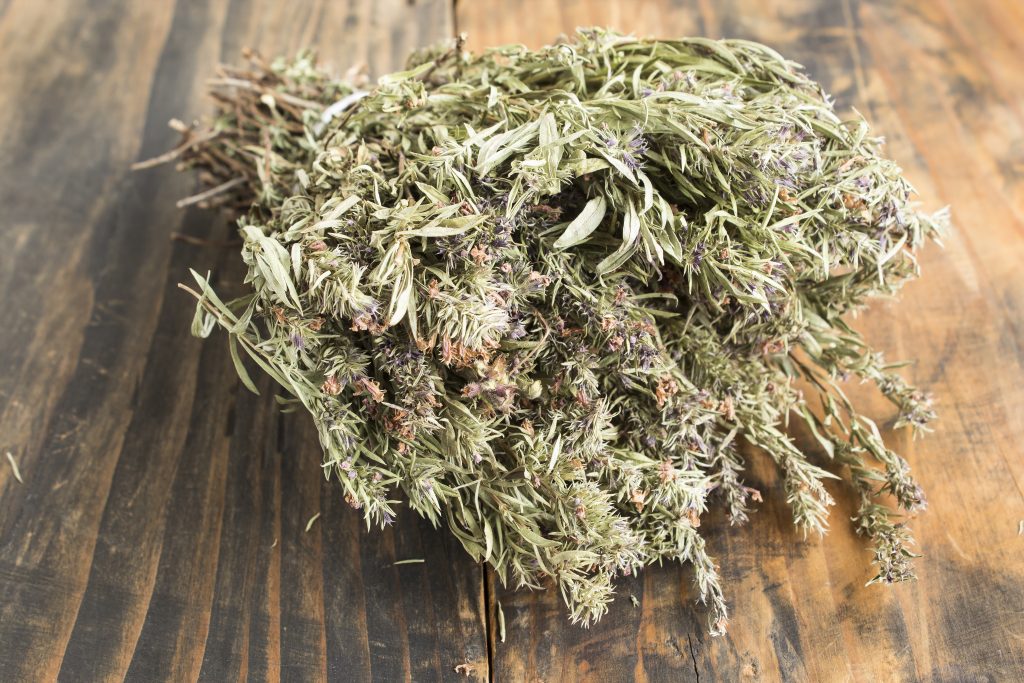
Summer savory, if it’s properly pruned and pinched back, grows in mounds up to 2 feet high and 3 feet wide. Its long, narrow leaves are aromatic and gray-green. Its lilac-colored flowers are attractive to honeybees.
Culinary Uses
Summer savory has sometimes been called “the bean herb” because it goes well with both green and dry beans. Not only does its flavor complement the taste of the beans, but it is also a good companion in the garden.
This herb should not be limited to only bean dishes, though. It can be used in a wide variety of meat and vegetable dishes, as well as in desserts. The Minnesota Herb Association notes that it also helps combat flatulence and ease digestion.
Herbal Blends

Summer savory combines well with other herbs. Here are a few combinations you could try. Experiment and see what pleases your palate.
- Summer savory is an integral part of the classic dried herbal mixture known as herbes de Provence, which is used on poultry and on a variety of vegetable dishes. Thyme, marjoram, basil, rosemary, sage, and fennel are also included in this herbes de Provence recipe.
- A Shaker soup seasoning blend from the 1800s featured dried summer savory, along with lemon peel, basil, thyme, marjoram, and parsley.
- A contemporary herb butter recipe from the Herb Society calls for blending fresh herbs, lemon juice, and garlic into softened butter. Combine the following ingredients, allow the flavors to blend for at least 1/2 hour before serving or freezing.
- 1 pound butter
- 1 t each of fresh summer savory, oregano, chives, rosemary, and thyme
- 4 t lemon juice
- 1 minced garlic clove
Meat Dishes
Savory gives “a spicy, warming flavor” to sausages, among other things. This New York Times recipe for sausage stuffing with summer savory (using the dried herb sprinkled over the stuffing before baking) received many positive reviews.
Use savory to make a marinade with mustard, vinegar, and wine to flavor meat and fish dishes.
The BBC suggests using fresh savory with chicken breasts and then using the crisp savory as a garnish.
Vegetable Dishes
As mentioned earlier, summer savory is traditionally paired with beans—boiled along with dried beans, chopped fresh over green beans, etc.
Fresh summer savory can be chopped and added to salads to add a little spice to your greens.
Summer savory is also a popular ingredient in vegetable soups. This recipe features a rather unusual combination: summer savory is used to flavor the rice, which is then added to a soup with broad beans and a mint-flavored yogurt.
Vegetable soups can be flavored with a blend of mustard, lemon, savory, and parsley.
Desserts
Savory can add a little unexpected liveliness to sweet dishes. The Herb Society of America offers two recipes with savory blended into sugar. Another recipe features a savory dish simmered with sugar and water to create a flavorful syrup.
Are The Flowers Edible?
Summer savory’s small lilac or purple flowers are edible. Their peppery flavor is similar to that of savory leaves. They’re used to flavor vinegar, butter, soup, tea, and more. Sometimes they’re also used in potpourris.
The flowers are also very attractive to bees, so there’s something to be said for letting your summer savory blossom. But after blooming, the plant is prone to browning and dying. You can pinch off the tips as they bloom, or cut off whole plants at blossom time. You can plant multiple successions, so some plants are producing fresh new leaves while others are blooming and dying.
Summer Savory’s Medicinal Uses
Summer savory was traditionally considered both a medicinal and culinary herb. Mother Earth News states that this herb has been believed to aid in a wide variety of ailments. These included dim vision, sore throats, sciatica, intestinal disorders, and wasp or bee stings. (They add that it was also used as an ingredient in love potions.)
Interest in summer savory’s medicinal possibilities has not wholly died out.
An article in the Journal of Traditional and Complementary Medicine reports that summer savory has verifiable health benefits. Recent studies have supported some traditional uses of savory, and new benefits have also been discovered.
In traditional medicine, summer savory was used to relieve muscle and bone pain. More recent studies have demonstrated that the oils in summer savory possess anti-inflammatory properties. This means that they can help to reduce swelling, thus reducing pain.
Summer savory also has antioxidant properties. This means that it helps to protect cells from damage caused by the unstable molecules called free radicals. Free radical damage has been linked with various diseases of aging, including cancer, heart disease, and stroke. ()
Traditional medicine sometimes prescribed summer savory for patients with heart problems or blood clots. Recent studies show that summer savory has some anti-coagulant effects, which means it can help to prevent blood clots.
Some of these studies featured more concentrated doses of savory’s essential ingredients in tablets or in alcohol tinctures. But the article suggests that eating summer savory in food or drinking it in tea can also have some beneficial effects.
Like other medicinal substances, summer savory can also create problems for people dealing with certain health conditions or taking certain medications. The article warns that “people who are taking medication for diabetes, hypoglycemia, high blood pressure, bleeding disorders, and other ailments are cautioned about its use.” It also points out that the effects of summer savory on children and on pregnant and breastfeeding women haven’t been adequately studied.
Summary
Summer savory has a wide range of traditional uses, which are being rediscovered now. Both the leaves and the flowers are edible and have medicinal properties.
Want to add this herb to your garden this year? Read more in our article on How to Grow Summer Savory.