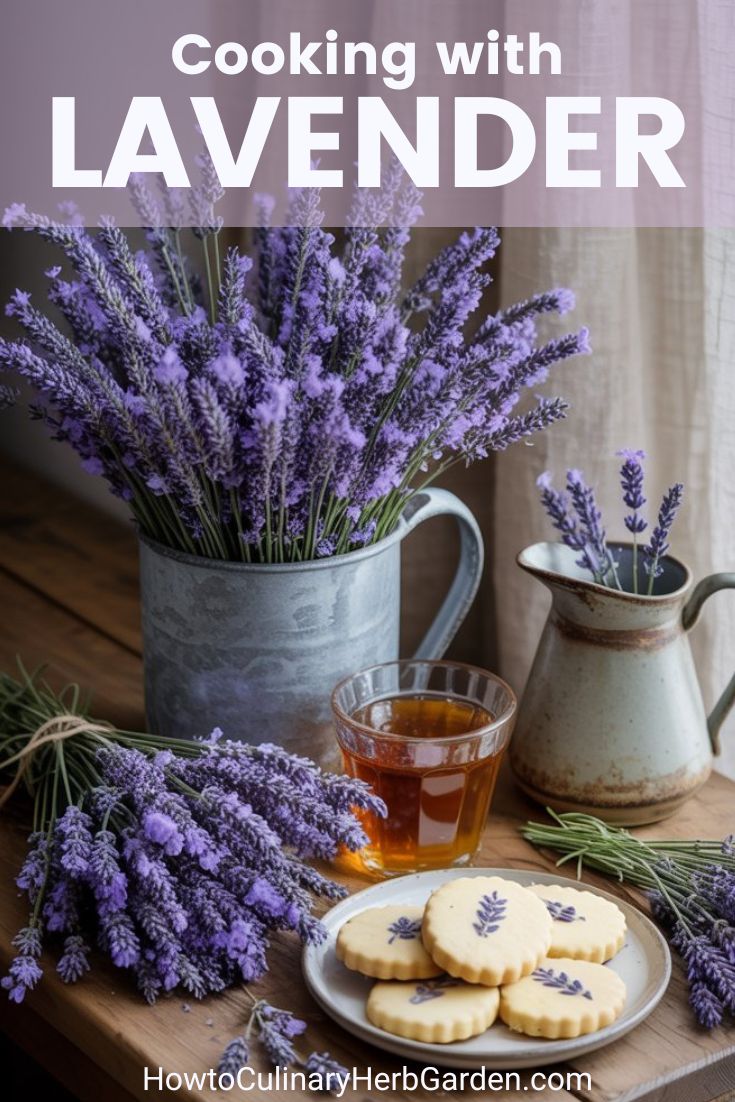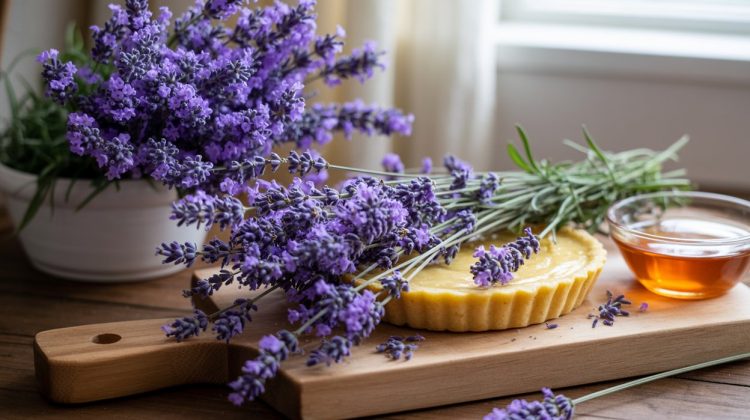
Lavender is a multi-purpose herb with ornamental, medicinal, and culinary uses. It’s also quite a versatile culinary herb. It makes a sweet, fragrant tea that is calming and can help promote sleep. It adds richness to various desserts. Its aromatic intensity also pairs surprisingly well with savory dishes.
This article will give you the basic information you need to select a good culinary lavender, harvest it, and prepare it. You’ll also find suggestions for how to use lavender in a way that enriches rather than overwhelming the recipes to which it’s added.
What is the Difference Between Culinary and Ornamental Lavender?
There are several basic types of lavender, some containing hundreds of individual varieties. Some of these have been developed primarily for culinary or medicinal use, others for their beauty in the garden and floral arrangements. Which one is best for cooking? That’s a matter of taste, but there are some areas where the experts agree.
- English lavender (Lavandula angustifolia) is one of the most popular culinary lavenders. It is particularly sweet and flavorful.
- French hybrid lavenders, or lavandins, can also make good culinary lavenders—particularly the variety called Provence (see section below).
- Spanish lavender (Lavandula stoechas) and fernleaf lavender (Lavandula dentata) have a peppery or resinous flavor, which doesn’t work well in cooking.
The United States Lavender Growers Association recommends Provence for savory dishes and some English cultivars for desserts.
Best Varieties/Cultivars of Lavender for Culinary Uses
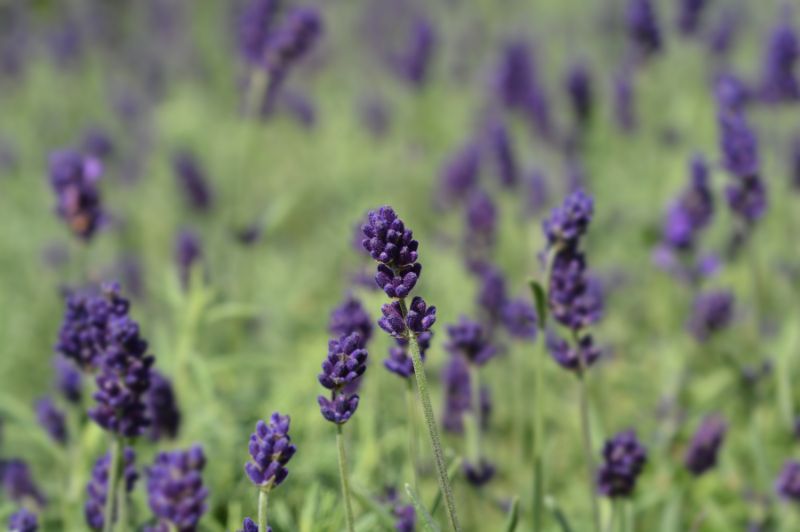
Among the French lavender varieties, Provence is the clear favorite for cooking. Provence’s blossoms, borne at the end of long stems, have an intense fragrance and flavor. It is hardy as far north as Zone 5.
When it comes to English lavender, which is most highly recommended by some experts, there’s less consensus on varieties.
- Cornell University notes that the variety known as New Zealand Blue is commonly used for cooking.
- Hidcote, Munstead, and Lady are frequently mentioned as classic English lavender varieties.
- The United States Lavender Growers Association suggests Melissa, Betty’s Blue, and Royal Velvet.
- Leimone Waite says that each English lavender has a distinctive taste.
With such a wide variety of culinary lavender, there are plenty of choices for home cooks to try in their recipes. We recommend that gardeners try a sample of varieties and taste the buds from different plants to see which complement their favorite recipes.
What Parts of the Lavender Plant are used in Recipes?
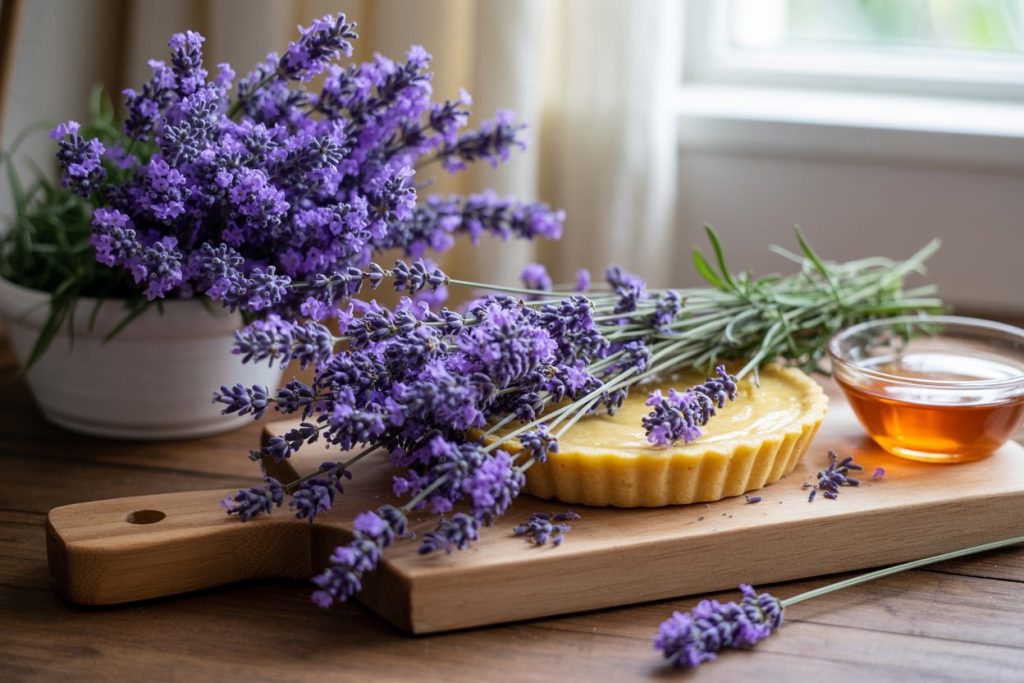
Both lavender flowers and lavender leaves can be used in cooking.
Sarah Garland writes in her Complete Book of Herbs and Spices that “the rather bitter aromatic leaves can be used to flavor game stews and marinades.” Lavender leaves are included in the mixture called herbes de Provence, which is used to flavor many savory dishes.
Lavender buds are more commonly mentioned in recipes. The Washington Post says buds go well in desserts, fruit dishes, and candied nuts, but also in savory dishes. She mentions substituting lavender buds for rosemary in recipes. The BBC suggests using lavender buds to flavor sugar for later use in desserts. I’ve mostly used lavender for tea and medicine, and I’ve only used the flowers.
Preparing Lavender for Cooking
For the best flavor, harvest lavender in the morning after the dew has dried but before the full heat of the day. Harvest flower heads when the buds are beginning to open. I try to clip heads off when only one or two florets are open. Leave flower stems as long as possible for ease of drying. I cut mine off just above the topmost pair of leaves on the stem.
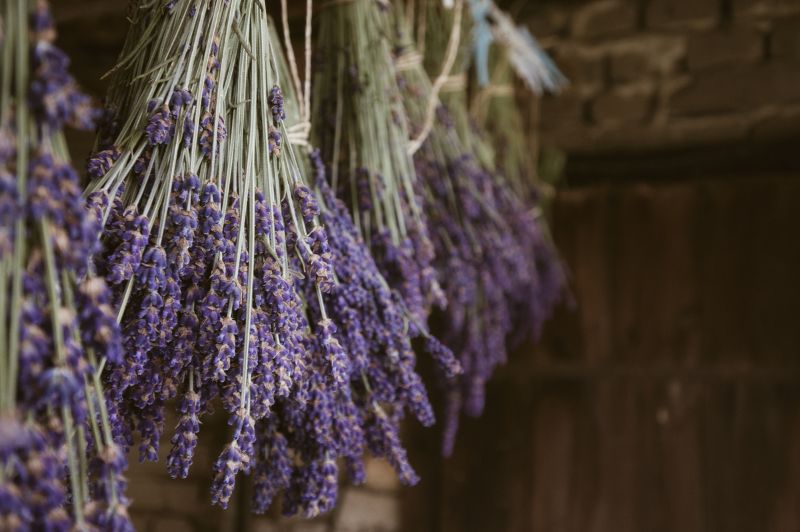
Both fresh and dried lavender are used in cooking. Lavender is very easy to dry. I just stick bunches of flower stems upright in mugs or vases and take care not to leave them in direct sunlight. Some growers with larger quantities of lavender tie up bundles of flower stems and hang them from racks or rafters in an airy place out of direct sunlight. Fully dry lavender is brittle, and the buds can be easily rubbed off the stem.
The next steps in preparing lavender for cooking depend very much on what you want to cook
Lavender can be infused into liquids. I mostly use lavender for a tea that helps me fall asleep easily and calms me when I’m anxious. I just add whole heads of lavender into water that’s just off the boil, steep for about 5 minutes, and strain.
Lavender infused into water, cream, or oil can also be used in various recipes. Combine lavender with barely boiling liquid and let stand. Keep tasting the liquid. When the flavor is strong enough, strain out the lavender by pouring the liquid through a fine sieve. If you leave the lavender in too long, the flavor will get coarser and less fresh.
The New York Times suggests infusing lavender into sugar and rose water to make a syrup for flavoring beverages.
If you’re not infusing the lavender into liquid, it’s best to crush the buds or leaves to release their full flavor. You can grind dried lavender buds with a mortar and pestle, or a food processor, and then mix them into ingredients like sugar or flour.
One NZ magazine recommends using one part lavender buds to five or six parts sugar, infused for two or three weeks. Lavender shortbread hearts, a BBC recipe, recommends combining two teaspoons of lavender flowers with two pounds of sugar and states that this mixture will keep for up to six months.

How to Avoid Making Your Food Taste Like Perfume or Soap
Lavender can impart a delicious flavor to your recipes. It can also become rather overwhelming, since it is highly aromatic. A little goes a long way. It is often blended with other herbs. In herbes de Provence, for savory foods, it’s often added to herbs like thyme, savory, tarragon, and fennel.
In sweet recipes, it may be paired with vanilla or lemon. Here are two desert recipes you can try.
How much lavender is too much? Well, that’s a matter of taste. Start with a small amount. If you like that, increase the amount of lavender slightly next time you make the same dish.
Summary
Lavender is versatile, delicious, and fairly easy to grow and to use. Experiment to find out which lavender varieties you like best and how much of each to add to your next culinary delight.
Like It? Pin It!