

Want to grow thyme but don’t know where to start? This hardy herb is one of the easiest plants for beginners to grow, whether you have a garden bed or just a sunny windowsill.
Thyme needs full sun, well-draining soil, and very little water once established, making it a low-maintenance choice for new gardeners. Unlike fussy herbs that require constant attention, thyme is a drought-tolerant perennial that comes back year after year with minimal care.
In this guide, you’ll learn exactly how to plant thyme, create the right growing conditions, and harvest fresh leaves all season long. You’ll also discover how to avoid common mistakes and keep your plants healthy for years to come.
Key Takeaways
- Thyme grows best in full sun with well-draining soil and requires deep watering only when the soil is completely dry
- You can grow thyme from cuttings or young plants spaced 12 to 24 inches apart after the ground reaches 70°F
- Harvest thyme by cutting the top 5 to 6 inches of growth just before the plant flowers for maximum flavor
How To Grow Thyme
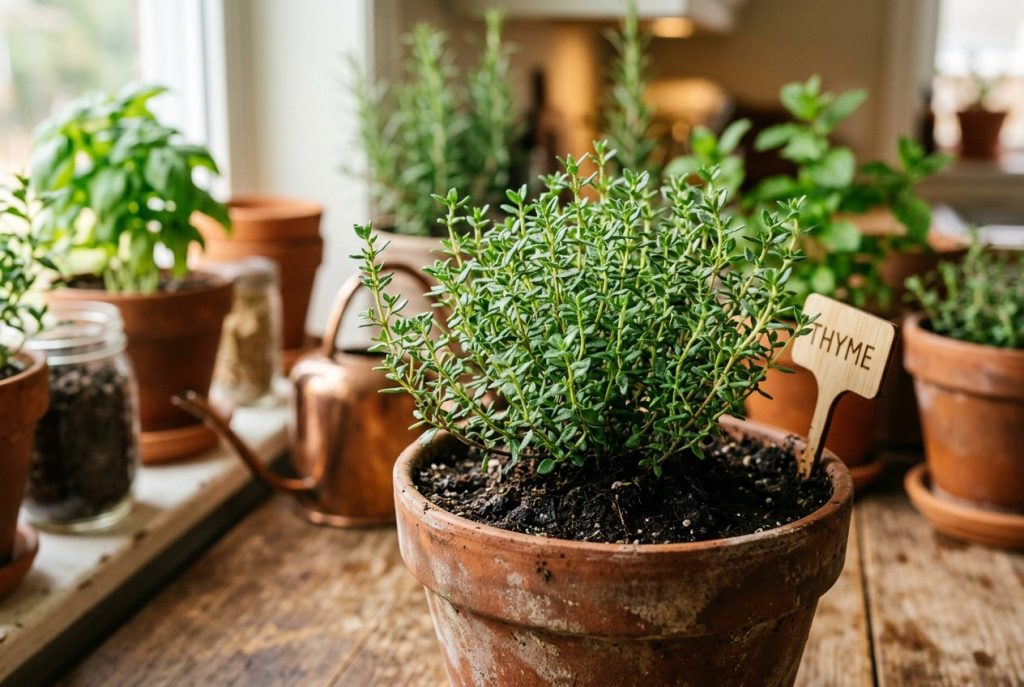
Growing thyme starts with choosing between seeds, nursery plants, or cuttings. Seeds take longer to establish, so most beginners find success with nursery starts or propagated cuttings from an existing plant.
When to Plant
Plant thyme outdoors in spring after the last frost has passed. This gives the plant time to establish roots before winter arrives.
Choosing a Location
Thyme needs full sun to thrive. Pick a spot that gets at least six to eight hours of direct sunlight each day.
The soil should drain well since thyme doesn’t tolerate wet conditions. Sandy or loamy soil works best, and you can even grow it in rocky gravel.
Planting in the Ground
Space thyme plants 12 to 24 inches apart to give them room to spread. These plants grow vigorously once established.
Plant at the same depth the plant was growing in its nursery container. Water immediately after planting, then let the soil dry completely between waterings.
Container Growing
Use a pot at least 6 inches deep and 12 inches wide with drainage holes. Terra-cotta or clay pots work well because they absorb excess moisture.
Fill with regular potting soil mixed with sand or perlite for better drainage. Place the container where it gets full sun for most of the day.
Key Growing Requirements
- Full sun (6-8 hours daily)
- Well-draining soil that isn’t too rich
- Infrequent watering only after soil dries out
- Space for plants to spread
Thyme Growing Conditions
Thyme thrives in warm, sunny spots with well-draining soil and minimal water. Getting these three conditions right will help your plants stay healthy and productive for years.
Light Requirements
Thyme needs full sun to grow its best. This means at least 6 to 8 hours of direct sunlight each day.
Thyme loves heat and comes from the Mediterranean region where sunny conditions are common. The more sun your thyme gets, the more flavorful its leaves will be. Less sunlight leads to leggy, weak growth and less aromatic foliage.
If you’re growing thyme indoors, place it near your sunniest window. South-facing windows work best in most homes. You can also use grow lights if natural light is limited, keeping them on for 12 to 14 hours daily.
Soil Requirements
Your thyme needs soil that drains well to prevent root problems. The plants develop “wet feet” when water sits around the roots, which can kill them.
Mix regular garden soil with sand or perlite to improve drainage. A slightly alkaline to neutral pH between 6.0 and 8.0 works well. You don’t need rich, fertile soil since thyme actually prefers leaner conditions.
In spring, you can add a light layer of compost around your plants. However, thyme doesn’t need much soil amendment compared to other herbs. Too much fertilizer produces excessive leaf growth with less flavor.
Watering Needs
Water your thyme only when the soil is completely dry. This drought-tolerant herb prefers dry conditions over wet ones.
Stick your finger into the soil about 2 inches deep. If it feels dry, give the plant a deep watering. If it still feels moist, wait another day or two before checking again.
Overwatering is the most common mistake when growing thyme. The plants handle drought much better than soggy soil. During hot summer months, you might water once or twice per week, but in cooler weather, you may only need to water every 10 to 14 days.
How To Plant Thyme
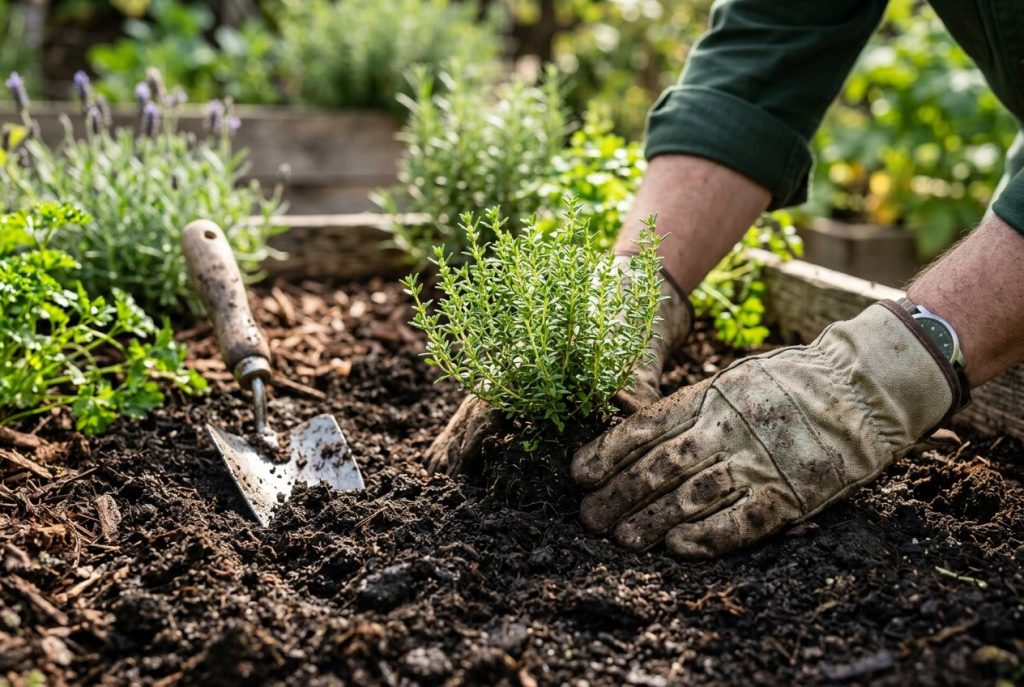
Starting thyme from transplants gives you faster results than seeds, while proper spacing ensures healthy growth and good air circulation.
Growing From Seed Vs Transplants
Growing thyme from seeds is challenging because of slow and uneven germination. Seeds can take several weeks to sprout, and many don’t germinate at all.
Buying transplants from a garden center or taking cuttings from an existing plant gives you much better results. If you want to try growing thyme from seed, start them indoors 6 to 10 weeks before your last spring frost date.
Transplants offer these advantages:
- Plants are ready to harvest within weeks
- You know exactly which variety you’re getting
- Success rate is much higher than seeds
- Plants establish quickly in your garden
You can also propagate thyme by taking 3-inch cuttings from the tip of a stem. Apply rooting hormone to the cut end and plant it in sterile sand or vermiculite until roots form in about 6 weeks.
For step-by-step instructions, be sure to read our guide on Starting new Thyme plants from seeds and cuttings.
Spacing And Placement
Plant thyme after the ground temperature reaches 70°F, which is usually 2 to 3 weeks before your last spring frost. Space young plants 12 to 24 inches apart depending on the variety you’re growing.
Thyme needs full sun and well-drained soil to thrive. The plants don’t like wet feet, so choose a spot where water drains quickly.
Good companion plants for thyme include:
- Cabbage
- Tomatoes
- Rosemary (in containers)
Plant thyme about 9 inches apart in the garden. The plants will grow 6 to 12 inches tall at maturity. If you’re growing in containers, pair it with rosemary since both herbs prefer similar sunny conditions and light watering.
Growing Thyme in Containers
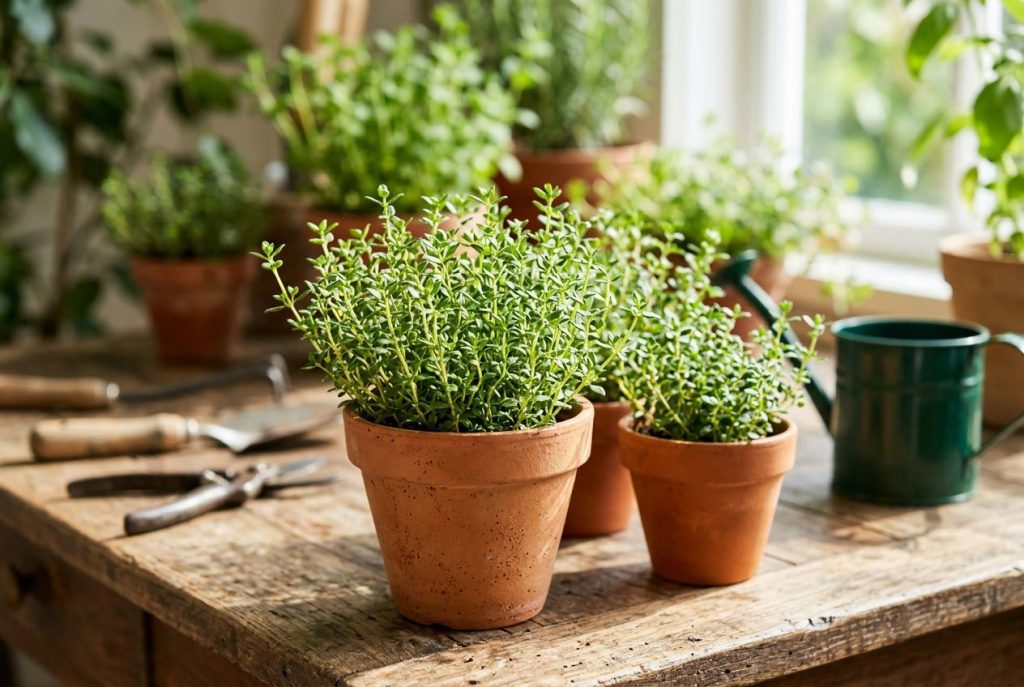
Growing thyme in pots works extremely well since this herb doesn’t need much space or water. Containers give you full control over soil drainage, which thyme absolutely requires.
Container Selection
Choose a pot that’s at least 6-8 inches deep with drainage holes in the bottom. Clay or terracotta pots work great because they allow excess moisture to evaporate through the sides. You can grow a single thyme plant in a smaller pot or combine multiple plants in a larger container.
Soil Requirements
Use a well-draining potting mix rather than garden soil. Regular potting soil often holds too much water for thyme. Mix in some sand or perlite to improve drainage if needed.
Placement and Light
Put your container in a spot that gets full sun for at least 6 hours daily. A sunny windowsill works well for indoor growing. If you’re keeping thyme outside, you can pair it with rosemary since both herbs like the same sunny conditions and watering schedule.
Watering Guidelines
Only water when the soil feels completely dry to the touch. Container thyme needs slightly more water than garden-grown plants since pots dry out faster. Still, let the soil dry between waterings to prevent root rot.
Winter Care
You can leave thyme containers outside during winter in most climates. The plants are hardy and will come back in spring. Just move pots away from harsh winds if temperatures drop very low in your area.
How To Care for Thyme
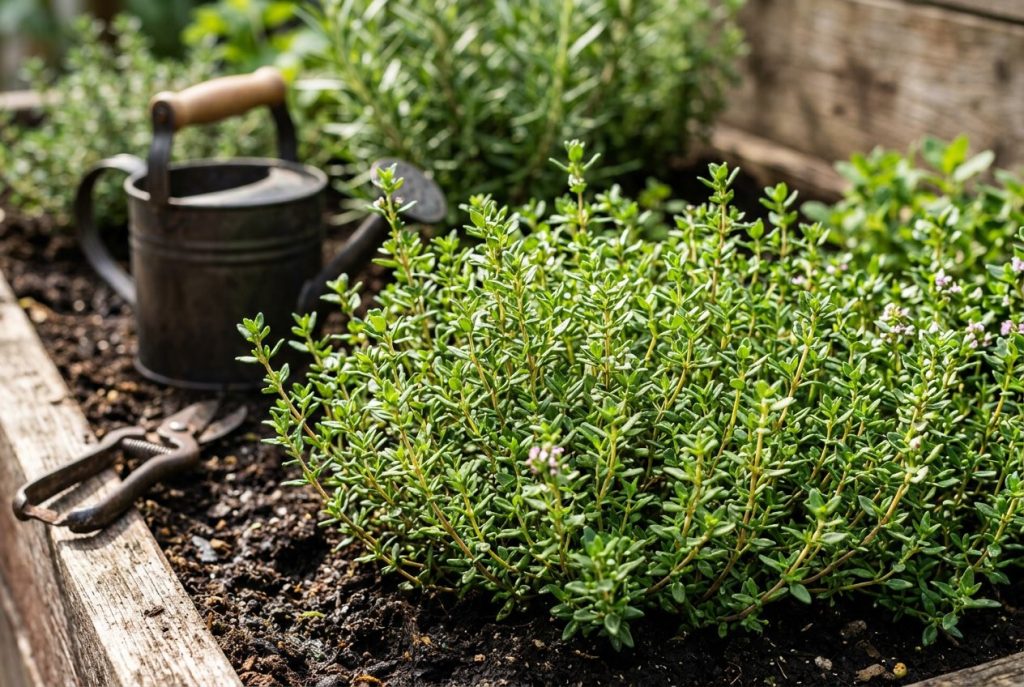
Thyme thrives with minimal attention once established, needing only occasional watering during dry spells and light feeding in spring. Regular pruning after flowering keeps plants compact and encourages fresh growth.
Watering And Feeding
Thyme is drought-tolerant and rarely needs watering once established. Water only during very long dry periods in summer, as thyme prefers drier conditions over wet soil.
If you’re growing thyme in containers, check the soil more frequently. Don’t let pots completely dry out, but avoid overwatering since thyme will die in overly wet soils.
Feeding requirements for thyme:
- Apply a light feeding of high potash plant food in spring
- Give a liquid feed during summer to improve growth, flavor, and flowering
- Avoid high nitrogen fertilizers that promote soft growth
Thyme doesn’t like rich soil, so don’t overfeed it. Too much fertilizer can actually reduce the strength of its flavor and make the plant more susceptible to pests like aphids.
Pruning And Maintenance
Cut back thyme after flowering with secateurs or shears to keep plants compact. This pruning promotes fresh, new growth and prevents the plant from becoming woody and leggy.
Trim off any dead or damaged stems throughout the growing season. Remove winter-damaged growth in early spring before new growth starts.
Add a mulch of horticultural grit or gravel around the base of your plants. This prevents moisture from sitting at the stem base and helps protect against rot.
Thyme rarely has pest or disease problems. The main issue to watch for is aphids on soft new growth, which usually only happens if you’ve overfed the plant with nitrogen-rich fertilizer.
When And How to Harvest Thyme
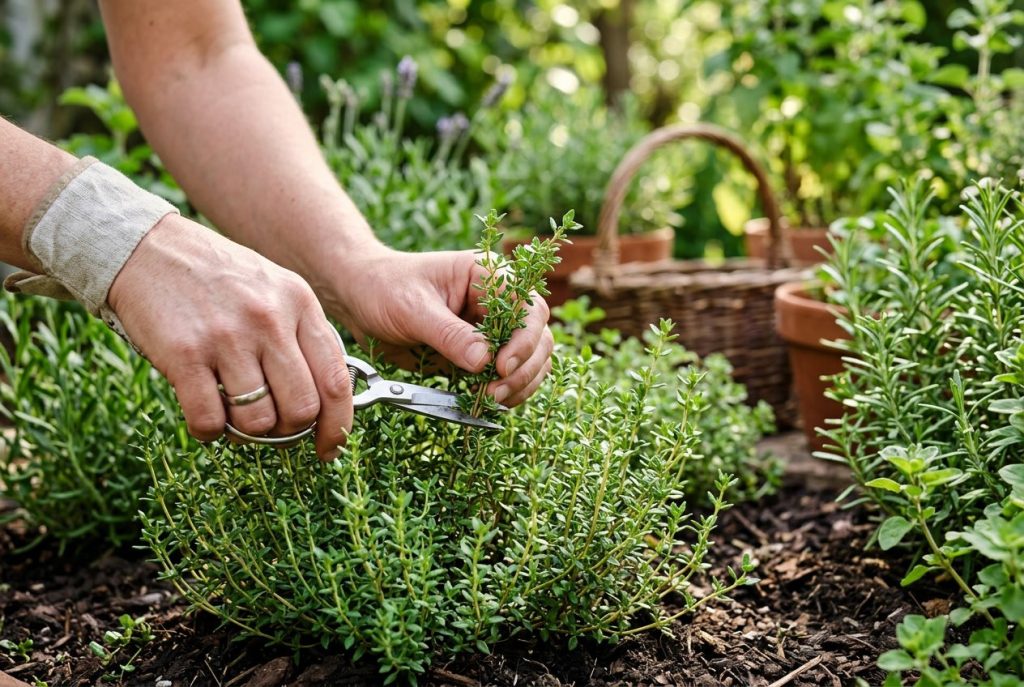
The best time to harvest thyme is just before the plant flowers, which gives you the strongest flavor. You can start harvesting once your plant has enough growth to spare.
For the best flavor, harvest in the morning after the dew dries. Cut off the top 5 to 6 inches of growth, leaving the woody stems behind.
What to cut:
- The soft, green stems at the top of the plant
- Healthy, vibrant leaves
- Growth from the current season
What to leave:
- At least 5 inches of growth on each stem
- The tough, woody base of the plant
- Enough foliage for the plant to keep growing
You can harvest thyme multiple times during the growing season. If you trim your plant regularly, it will keep producing new growth and maintain a compact shape. Just make sure you never cut back more than one-third of the plant at once.
Trim thyme whenever it gets leggy to encourage bushier growth. You can continue harvesting well into late fall in many climates.
Don’t wash clean thyme leaves right after cutting. Water removes some of the essential oils that give thyme its flavor. If your leaves need cleaning, gently wipe them with a damp cloth instead.
Fresh thyme stays good for 1 to 2 weeks when wrapped lightly in plastic and stored in the refrigerator.
Common Problems When Growing Thyme
Overwatering is the most common mistake when growing thyme. This Mediterranean herb prefers dry conditions and can quickly develop root rot in soggy soil. If you notice yellowing leaves or wilting despite moist soil, you’re likely watering too much.
Spider mites can attack your thyme, especially in hot, dry conditions. Look for tiny yellow spots on leaves or fine webbing on stems. You can spray affected plants with water or use neem oil every 5-7 days to control these pests.
Poor drainage causes many thyme problems. If your soil stays wet for too long, the plant’s roots will suffocate and rot. Mix sand or perlite into heavy soil to improve drainage before planting.
Common thyme growing issues:
- Leggy growth – Not enough sunlight; move to a location with at least 6 hours of direct sun
- Brown, crispy leaves – Either underwatering or frost damage in cold weather
- Stunted growth – Soil may be too rich; thyme prefers lean, low-fertility soil
- Fungal problems – Too much moisture and poor air circulation around plants
Dense, overcrowded stems create humidity pockets that invite disease. Trim your thyme regularly to improve air flow through the plant.
Thyme struggles in humid climates where it stays constantly wet. If you live in a rainy area, grow thyme in containers with excellent drainage or on raised beds where water can escape quickly.
Tips For Growing Thyme Successfully
Water only when the soil is completely dry. Thyme is a Mediterranean herb that prefers dry conditions over wet ones. Overwatering is one of the most common mistakes beginners make with this plant.
Plant thyme in full sun for the best growth. This herb needs at least 6 to 8 hours of direct sunlight each day. If you’re growing thyme indoors, place it near a sunny window where it can get plenty of light.
Use well-draining soil to prevent root rot. Heavy, wet soil can kill thyme quickly. Mix in sand or perlite if your garden soil holds too much water.
Prune your plants regularly to encourage bushy growth. Trim thyme whenever it gets leggy to keep it compact and productive. This also helps the plant produce more fresh leaves for harvesting.
Add light mulch after the ground freezes in cold climates. This protects the roots during harsh winter months. Don’t mulch too early or you might trap moisture around the plant.
Replace plants every 3 to 4 years for the best flavor. Older thyme plants become woody and produce leaves with less flavor. You can take cuttings from your existing plants to start new ones.
Pair thyme with compatible plants in your garden. It grows well near cabbage, tomatoes, and rosemary since they have similar sun and water needs.
Apply minimal fertilizer for healthy growth. A small amount of compost in early spring is usually enough. Too much fertilizer can reduce the essential oils that give thyme its strong flavor.
Conclusion
Growing thyme is one of the easiest ways to start an herb garden. This hardy plant doesn’t need much attention once it’s established in the right spot.
You’ll get the best results by planting thyme in full sun with well-draining soil. Water only when the soil is completely dry, and avoid overwatering since thyme prefers drier conditions.
Remember to trim your thyme regularly to keep it compact and bushy. You can harvest thyme throughout the growing season by cutting the top 5 to 6 inches of growth, leaving the woody stems behind.
Key points to remember:
- Plant in full sun with good drainage
- Water sparingly when soil is dry
- Harvest before flowering for best flavor
- Replace plants every 3 to 4 years when they get woody
- Mulch lightly in winter if you have cold temperatures
Thyme works well with other drought-tolerant plants in your garden. Plant it near rosemary if you’re growing in containers since they need similar care.
Your thyme plants will reward you with fresh herbs for cooking throughout the year. With minimal effort, you’ll have a steady supply of this flavorful herb right outside your door.