

It’s fairly easy to enjoy a steady supply of fresh herbs during the growing season. With a little more effort and care, you can also bring many herbs indoors to grow through the winter.
Questions to Consider Before Bringing Your Herbs in for the Winter Months
Is this herb annual or perennial?
Perennials, like rosemary, may grow and thrive for years both indoors and outdoors. Other perennial herbs include sage, thyme, chives and oregano.
Annuals, like basil, can also be grown inside. But they will seed and die within a year or so, even if you protect them against frost or bring them inside. So, while you can extend the growing season by bringing annual herbs indoors, you will need to purchase new starts or seeds the following spring.
How cold should I let this herb get before I bring it in?
This depends on how hardy your plants are.
- Frost-sensitive herbs, like basil, need to be brought in before any danger of frost.
- Rosemary can be left outside until nighttime lows approach 20 degrees.
- I find that chives grow best in winter if I let them freeze before bringing them in.
- Even the hardiest herbs must be dug out of the ground before it freezes.
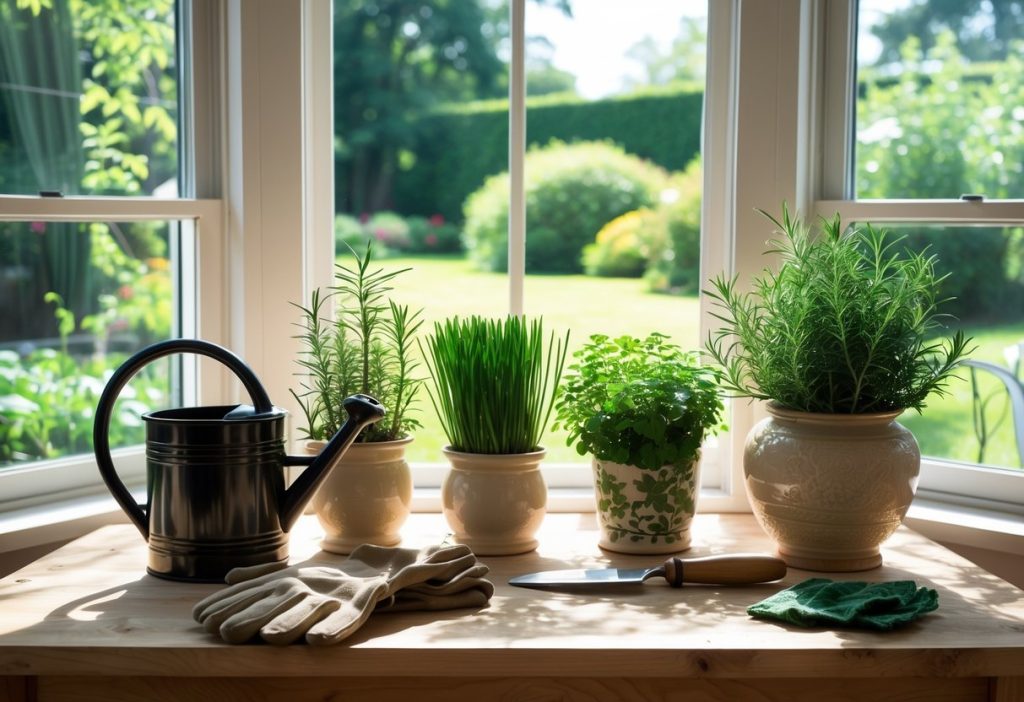
Step-by-Step Guide to Transplanting Herbs from the Garden
- Find and wash your containers. Make sure the containers you choose are large enough for the herbs you mean to put in them, and that they have adequate drainage holes.
- Add drainage. Put a layer of small stones in the bottom of your container. Or at least put stones near the drainage holes so they won’t clog with soil and roots and stop draining.
- Add a layer of potting mix. I use a mixture of vermicompost, perlite, and garden soil or peat moss, giving more compost to heavy feeders like basil. If you want to mix your own soil as well, here are some Cooperative Extension-recommended potting soil recipes. You can also buy ready-to-use potting mixes – a favorite of mine is Black Gold Organic potting soil, which can be used indoors or outside.
- Dig up your herbs. For soft-stemmed clumping herbs like chives, thyme, and oregano, dig out patches of the right size to fit in your containers. For woody plants like sage and rosemary, dig the whole bush up and divide it into as many pieces as you see fit. Sage will survive winter outdoors, so you can set some divisions back into the garden while bringing some in for winter production. Rosemary may not survive outside, depending on your growing zone. (link to your article on overwintering rosemary)
- Set herbs into pots and gently pack in more potting mix until the pots are full.
- Wait a few days. Unless the weather is about to turn dangerously cold, leave potted plants outside for a few days so they don’t have to adjust to their pot and to the different conditions indoors simultaneously.
What Herbs Can I Bring Indoors Successfully?
Basil, chives, oregano, parsley, rosemary, sage, and thyme can all be moved indoors for the winter months. Here are some tips for bringing in each herb this winter.
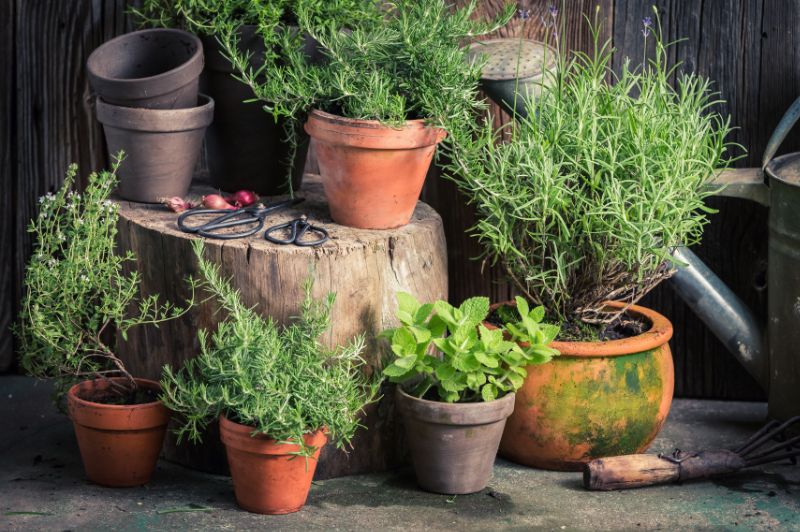
Basil is very frost-sensitive. I try to bring mine in before nighttime lows dip below 40. Here in northern NY, basil does well indoors during the fall and early winter, but peters out around the time of the winter solstice. In climates where winter days are longer and brighter, it might last longer.
I find it works best to bring in a small plant started in midsummer, instead a big plant started in spring.
According to Rodale’s Garden Problem Solver, basil needs containers at least 12 inches deep. It likes a richer soil than many other herbs, and it needs all the sun and warmth it can get.
Chives are easy to grow in containers—I’ve had success in pots only 8” deep. I pot chives up, leave them outdoors for at least a month of hard freezes, and then bring them inside. The tops die in the freeze, but the roots survive and send up tender new shoots soon after I bring them in. They don’t need rich soil, and they prefer cooler temperatures than basil.
Oregano will grow in containers as shallow as 6” deep, according to Rodale’s. It likes full sun and medium-rich soil and isn’t fussy about temperature.
Parsley is a biennial. Bring in plants that have been growing for less than a year. Parsley has a taproot, so it needs containers at least 12 inches deep, according to Rodale’s. It prefers cool temperatures, as chives do, but, like basil, it prefers a richer soil.
Rosemary needs large containers, at least 12 inches deep and 12 inches wide. A larger plant may require a larger pot. I leave my rosemary outside during the first frosts, but bring it in before the lows near 20 degrees. I also leave mine potted year-round, placing it outside during the mild season. Rosemary likes a light soil, cool temperatures, and plenty of sunlight.
Sage also requires large pots, at least 12 inches deep. It’s quite cold-tolerant, so you can leave it outside during early frosts. Sage thrives in rich soil and full sunlight.
Thyme is shallow-rooted and can thrive in a 6” deep container. Rodale’s says it can be container-grown year-round with regular pruning. The main danger is rot in the matted foliage. Thyme is drought-tolerant, so avoid overwatering. Full sun and light, well-drained soil are best for it.
Winter savory can be grown in containers at least 6 inches deep. Bring it in before the ground freezes. Full sun and light soil will suit it best.
Caring for your Potted Herbs
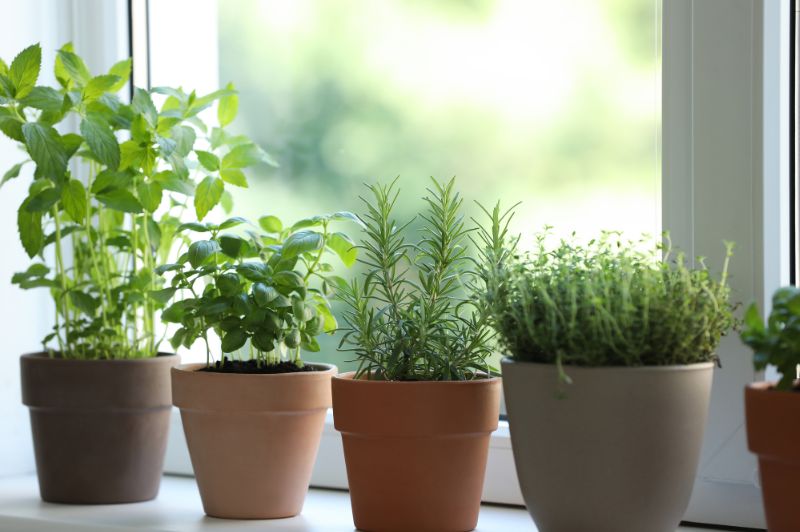
Once your herbs are inside, make sure they get enough water and light. At least six hours of sunlight daily is required for maximum health. In my experience, Basil wants even more than that. So, position your basil in the sunniest spot.
If your newly transplanted pots are a little droopy, they may still be dealing with transplant shock. In this case, keep the plants in indirect light for their first week indoors. If you don’t get enough sunlight in your indoor growing area, you may use grow lights to extend the ‘day’ for your plants.
Rotate your indoor herb plants regularly so they don’t tip toward the light. I turn mine every week or two, and that seems to be good enough.
Most herbs will do well with slightly dry soil—overwatering can be more of a problem than underwatering. But see individual notes above for each herb’s specific preferences.
Do You Need to Fertilize Your Indoor Herb Plants?
That depends on the type of soil you’ve used and the type of herb you’re growing. My basil and chives are planted in a compost-rich mix, and I add vermicompost to the top of the pot once or twice; I don’t give them liquid fertilizer. Experts disagree on this topic. Some master gardeners recommend giving potted herbs a low dose of liquid fertilizer every two weeks; others don’t mention fertilizing at all.
Inspecting Indoor Plants for Insects
If you see holes or small discolored spots on the leaves of your herbs, look for aphids or whiteflies—tiny pale-colored insect larvae on the undersides of the leaves. Spraying Safer’s or another organic insecticidal soap should take care of this.
For more details on pest and disease problems for indoor herbs, see our Greenhouse Troubleshooting Tips article.
Summary
Many herbs can be brought in and enjoyed through the winter. Use the above notes as a starting point. Keep notes on what works and what doesn’t work for you.