

Are your indoor herbs growing tall, thin, and floppy instead of staying compact and bushy?
Leggy herbs happen when plants stretch toward light, creating long stems with fewer leaves. The most common fix is giving them more light, either from a sunny window or a grow light.
Once you know what’s causing the problem, it’s usually easy to fix. Low light is the main issue, but pot size, spacing, and pruning can also play a role.
In this guide, we’ll look at how to spot leggy growth, what causes it, and a few simple ways to fix it. You’ll also find tips to help keep your herbs compact from the start.
Key Takeaways
- Leggy herbs grow long, thin stems with fewer leaves, usually due to low light
- Moving herbs to a brighter spot or adding a grow light helps them stay compact
- Regular pruning, proper spacing, and the right pot size help prevent legginess
What Does It Mean When Herbs Are Leggy?
Leggy herbs have long, thin stems instead of staying short and bushy. The space between each set of leaves gets wider as the plant stretches upward.
These plants often look weak or droopy, and may lean toward a light source. They can also look a bit untidy compared to healthy, compact herbs.
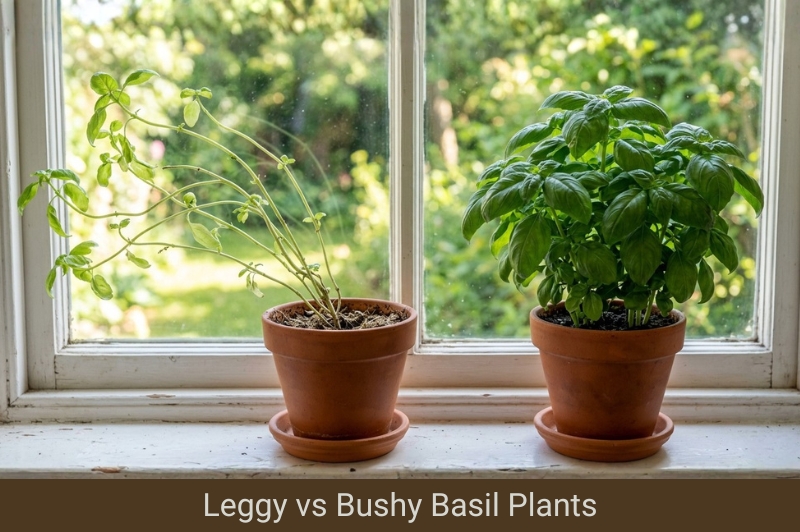
Common signs of leggy growth include:
- Long gaps between leaf nodes
- Thin, weak stems
- Plants leaning toward light
- Fewer leaves overall
If your herbs are growing tall and thin, they’re usually trying to reach more light.
The stems may bend or break easily, which also makes harvesting more difficult.
A healthy herb plant should stay compact, with leaves growing close together on sturdy stems
Why Are My Herbs Leggy?
Leggy herbs have long, thin stems with wide gaps between leaves instead of bushy, compact growth. The most common causes are low light, overcrowding, and lack of pruning.
Not Enough Light
Light is the biggest reason herbs become leggy. When plants don’t get enough, they stretch upward looking for more, which leads to weak stems and widely spaced leaves.
Indoor herbs often struggle with light, since even a bright window isn’t as strong as outdoor sun.
When light is limited, stems become thin and fragile, and the gaps between leaves get larger as the plant keeps reaching.
Overcrowding
When herbs are planted too close together, they compete for light. Each plant tries to outgrow the others, which leads to tall, stretched growth instead of a full, bushy shape.
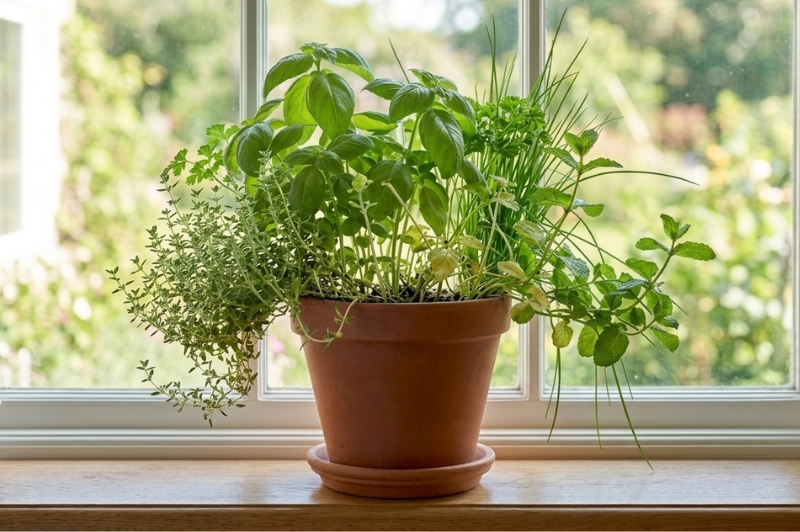
Crowded plants also compete for nutrients, which adds stress and encourages upward growth instead of side growth.
Giving your herbs enough space allows light to reach all sides, helping them grow more evenly.
Lack of Pruning
Herbs that aren’t trimmed regularly will naturally grow taller and become leggy. Without pruning, the plant focuses on upward growth instead of producing new side shoots.
Regular trimming encourages branching and helps plants grow fuller. Cutting the tips signals the plant to send out new growth lower down.
If herbs are allowed to flower, they shift their energy into producing seeds instead of leaves, which leads to longer stems and weaker growth.
How to Fix Leggy Herbs
To fix leggy herbs, focus on improving light, trimming overgrown stems, and giving plants enough space. These simple changes are usually enough to get them growing properly again.
Improve Light Conditions
Light is the most important factor when fixing leggy herbs. Most herbs need 6 to 8 hours of direct light each day to stay compact.
Move your herbs to the sunniest window available—south-facing is best. If that’s not enough, add a grow light positioned a few inches above the plants
Indoor herbs often need more light than people expect. While 6 to 8 hours of sunlight is usually enough outdoors, herbs grown under lights may need closer to 8 to 10 hours a day
Rotating your pots every few days also helps, so all sides of the plant get even light.
Prune and Trim Regularly
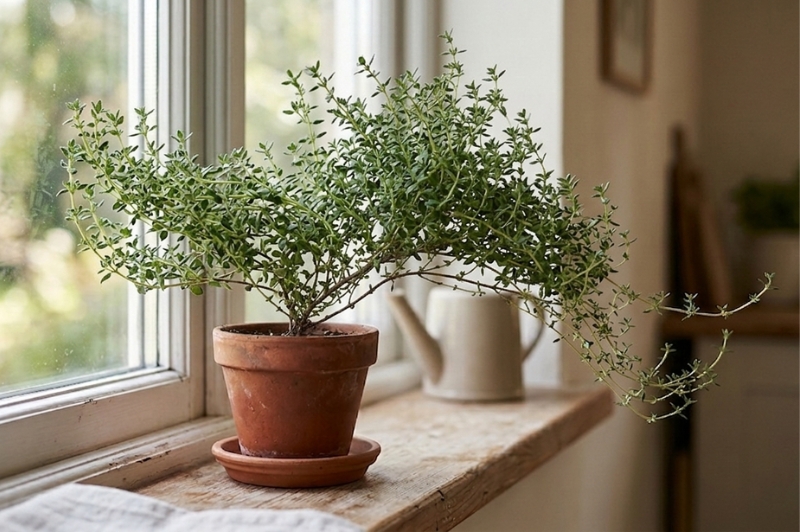
Regular pruning helps herbs grow fuller and prevents them from getting too tall.
Snip stems just above a set of leaves using clean scissors or shears. This encourages the plant to branch out instead of growing upward.
Pinching off the tips when plants are young helps them stay compact. Remove any flowers as they appear, since they take energy away from leaf growth.
For very leggy plants, you can cut stems back by up to half to encourage new growth.
Repot or Space Plants
Giving herbs enough space helps prevent them from stretching for light.
Place pots at least 6 to 8 inches apart so light and air can reach all sides. This helps plants grow more evenly instead of competing with each other.
If a plant is extremely leggy, you can repot it and bury part of the stretched stem. This works well for herbs like basil, where the buried stem can grow new roots and help support the plant.
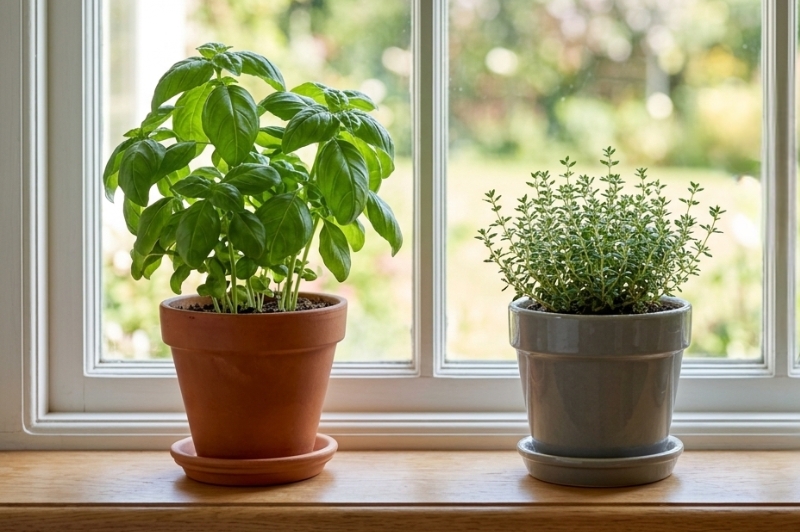
Most herbs respond quickly once you improve their light and start pruning regularly.
Can Leggy Herbs Recover?”
Yes, most herbs will recover once you improve light and prune regularly. While older stems may stay stretched, new growth will be fuller and more compact.
How to Prevent Leggy Growth
It’s much easier to prevent leggy growth than to fix it later. A few simple habits can make a big difference.
- Give your herbs enough light. Place them in a south-facing window where they get at least 6 hours of direct sun. If needed, use a grow light to supplement.
- Choose the right pot size. Smaller containers help keep plants compact, while larger pots can encourage taller growth.
- Space plants properly. Avoid crowding herbs in the same container, since competition for light leads to stretching.
- Trim regularly. Frequent pruning encourages bushier growth and keeps plants from getting too tall.
- Remove flowers quickly. Pinch off flower buds as soon as they appear so the plant focuses on leaf growth.
- Water correctly. Let the soil dry slightly between waterings instead of keeping it constantly wet.
- Avoid too much fertilizer. High-nitrogen fertilizers can cause fast, weak growth. Use less than you think you need.
Leggy herbs are usually caused by low light, crowding, or lack of pruning, and they’re often easy to fix. Improving light, trimming regularly, and giving plants enough space will help them grow fuller and stronger.
With a few small adjustments, most herbs will bounce back and start growing the way they should.
If you’re growing herbs indoors, this guide to indoor herb gardening setups can help you get it right.